Milk Frothers
How To Choose A Milk Frother That Fits Your Coffee Routine
Pick a milk frother by matching the type, capacity, cleanup, and foam style to the drinks you actually make at home.
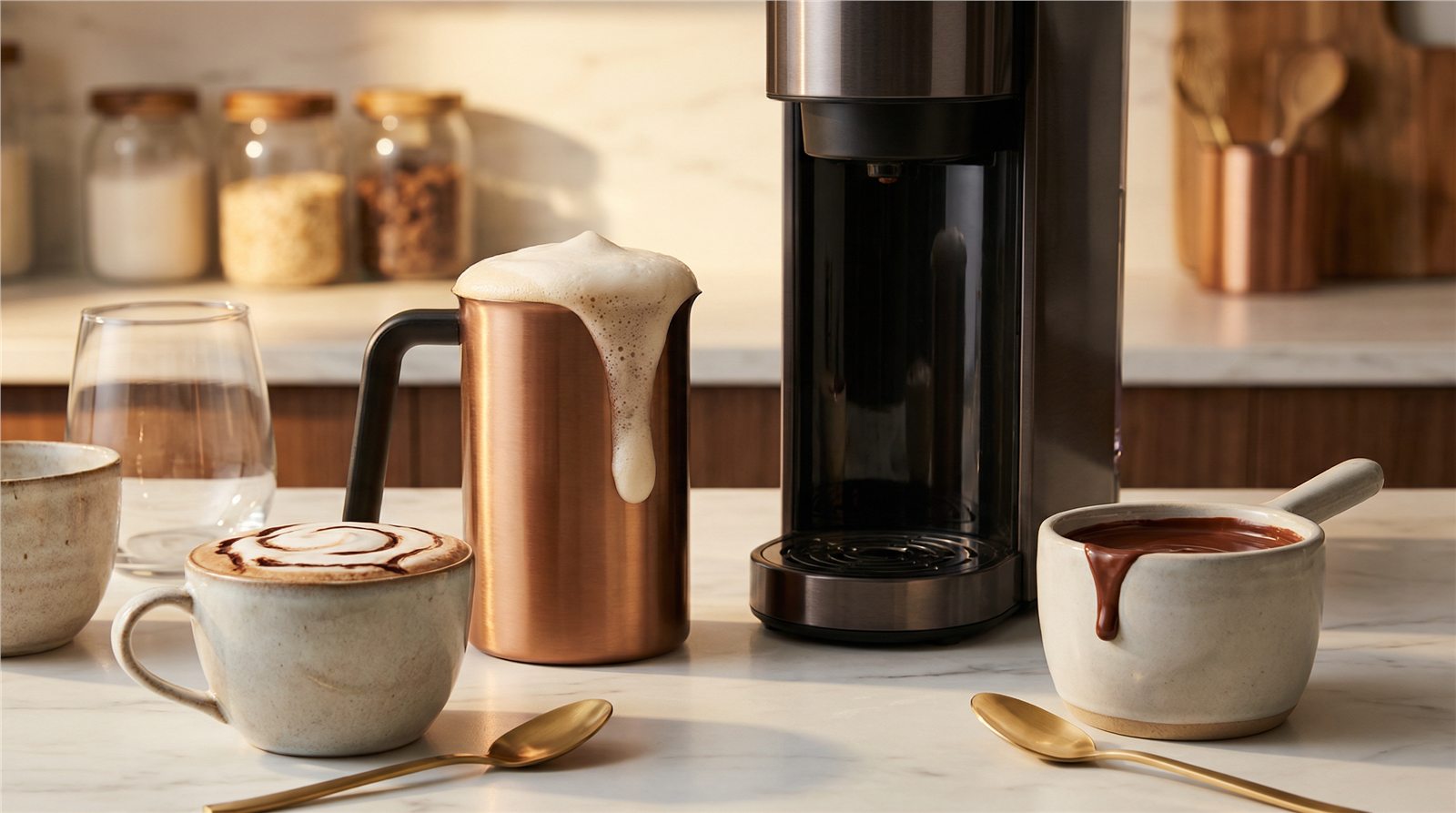
A milk frother sounds like a small countertop extra until it changes how often you make drinks at home. The right one can turn weekday coffee into a latte, give hot chocolate a smoother finish, and make an after-dinner drink feel planned instead of improvised. The wrong one becomes another tool that is hard to clean, too weak for the milk you prefer, or sized for a household you do not have. The best choice starts with your routine, not the longest feature list.
Start with the drinks you make most
If your main drink is one morning latte, you probably need fast warm foam, a small footprint, and a container that rinses quickly. If you make iced coffee most afternoons, cold foam matters more than heat. If the house makes several drinks on weekends, capacity and repeat runs become the real difference. Write down the two drinks you make most often before comparing models. That keeps you from paying for modes you will rarely touch.
Cappuccino drinkers usually want dense foam that holds a mound. Latte drinkers want silkier foam that blends into coffee without turning dry. Hot chocolate and dessert drinks often need gentle mixing so cocoa, chocolate sauce, or flavored powder does not clump at the bottom. A frother that can warm, spin, and stop consistently will usually feel better than one that only looks powerful on a product page.
Pick the frother type first
Handheld wand frothers are the simplest choice. They are inexpensive, easy to store, and useful for quick foam in a mug. They do not heat milk, and the final texture depends on your hand position and the cup shape. Choose a wand if you want a low-commitment tool, make mostly one drink at a time, or already warm milk separately.
Countertop pitcher frothers are more automatic. You add milk, select a mode, and let the machine handle heat and motion. They are better for repeatable warm foam, cold foam, and hot chocolate style mixing. The tradeoff is counter space and more parts to wash. Choose this style if you want reliable texture without learning a wand technique.
Espresso-machine steam wands produce the most cafe-like milk when used well, but they need practice and cleanup right after each drink. They also make the most sense if espresso is already part of your setup. If you drink brewed coffee, pod coffee, or hot chocolate more often than espresso, a dedicated pitcher frother can be the more practical upgrade.
Match capacity to real portions
Capacity listings can be confusing because a frother usually has separate maximum lines for heating milk and for making foam. Foam expands, so the foam line is lower. A small unit may be perfect for one cappuccino but frustrating for two mugs. If you often make drinks for two people, look for a pitcher size that handles both servings without overfilling. Overfilling creates mess, weak texture, and extra cleanup.
Do not oversize without reason. Larger pitchers can take more space and may perform worse with very small amounts of milk. If your routine is one eight ounce drink before work, a compact unit that does one serving well may be better than a family-size model you have to rinse around.
Think about milk choice before foam claims
Dairy milk, oat milk, almond milk, and lactose-free milk can all behave differently. Some plant milks foam beautifully, while others make large bubbles or collapse quickly. If you use plant milk most of the time, look for notes about barista blends, cold foam, and lower heat settings. Higher heat is not always better. It can make some milks taste flat or leave residue on the bottom of the pitcher.
For dessert drinks, texture matters as much as height. A glossy, pourable foam can make cocoa, mocha, chai, or a coffee float feel finished. A stiff foam may look impressive but sit on top instead of blending into the drink. When comparing options, pay attention to whether the frother offers separate modes for hot foam, cold foam, warm milk, and mixing.
Make cleanup a buying requirement
A frother that is annoying to clean will not stay in rotation. Removable whisks, smooth pitcher interiors, and clear minimum and maximum marks help. Nonstick interiors can be convenient, but they still need gentle cleaning and careful utensils. Dishwasher-safe parts are useful, but check which parts qualify. Many bases and electrical components can never be submerged.
For daily use, the fastest routine is rinse right after pouring, wipe the whisk area, and leave the lid open to dry. If milk residue sits until later, even a good frother becomes harder to clean. Choose a design that makes the right behavior easy when you are busy.
Check noise, footprint, and storage
Noise matters in a kitchen with early mornings, kids, or shared walls. Wand frothers are brief but buzzy. Pitcher frothers are usually quieter, though some make more vibration than expected. Footprint also matters. A tool that lives on the counter is more likely to be used, but only if it earns the space. If it will sit in a cabinet, make sure the lid, whisk, and cord do not turn storage into a puzzle.
Look for practical details: a spout that pours cleanly, a lid that fits firmly, markings you can read under kitchen light, and a base that does not slide. These small choices matter more after thirty uses than they do during the first unboxing.
Use the simple decision rule
Choose a handheld wand if you want the lowest cost, make one quick drink, and do not mind heating milk separately. Choose an automatic pitcher if you want repeatable hot or cold foam with less technique. Choose a steam wand setup if espresso is central to your routine and you are willing to practice. After that, narrow by capacity, cleanup, and the milk you actually use.
Before you check out, compare the warranty notes, replacement whisk availability, and return window. Those boring details matter because frothers handle heat, movement, and milk residue every day. A simple model with easy parts support can be a better long-term buy than a feature-heavy unit that is difficult to maintain.
Frothers worth comparing
For a simple starting point, compare this compact milk frother on Amazon for everyday latte foam and smaller drink routines with this larger glass milk steamer and frother on Amazon for multiple servings, easy measuring, or hot chocolate nights. Check each Amazon listing for current specifications, price, availability, care notes, and return terms before buying.
Retailer details, availability, and features can change, so verify the current listing before buying. If you compare Amazon options from MeltNSip recommendations, confirm the product link carries associate tag mmwtmelt-20. The best frother is the one that makes your normal drink easier, cleaner, and more enjoyable several times a week.