Milk Frothers
Cold foam at home: picking a frother that actually gets iced coffee season right
Iced latte season deserves better than warm foam sinking into a cold drink. Here is how cold foam works, which frother features matter, and four machines from the Melt N Sip Cart lineup that handle it well.
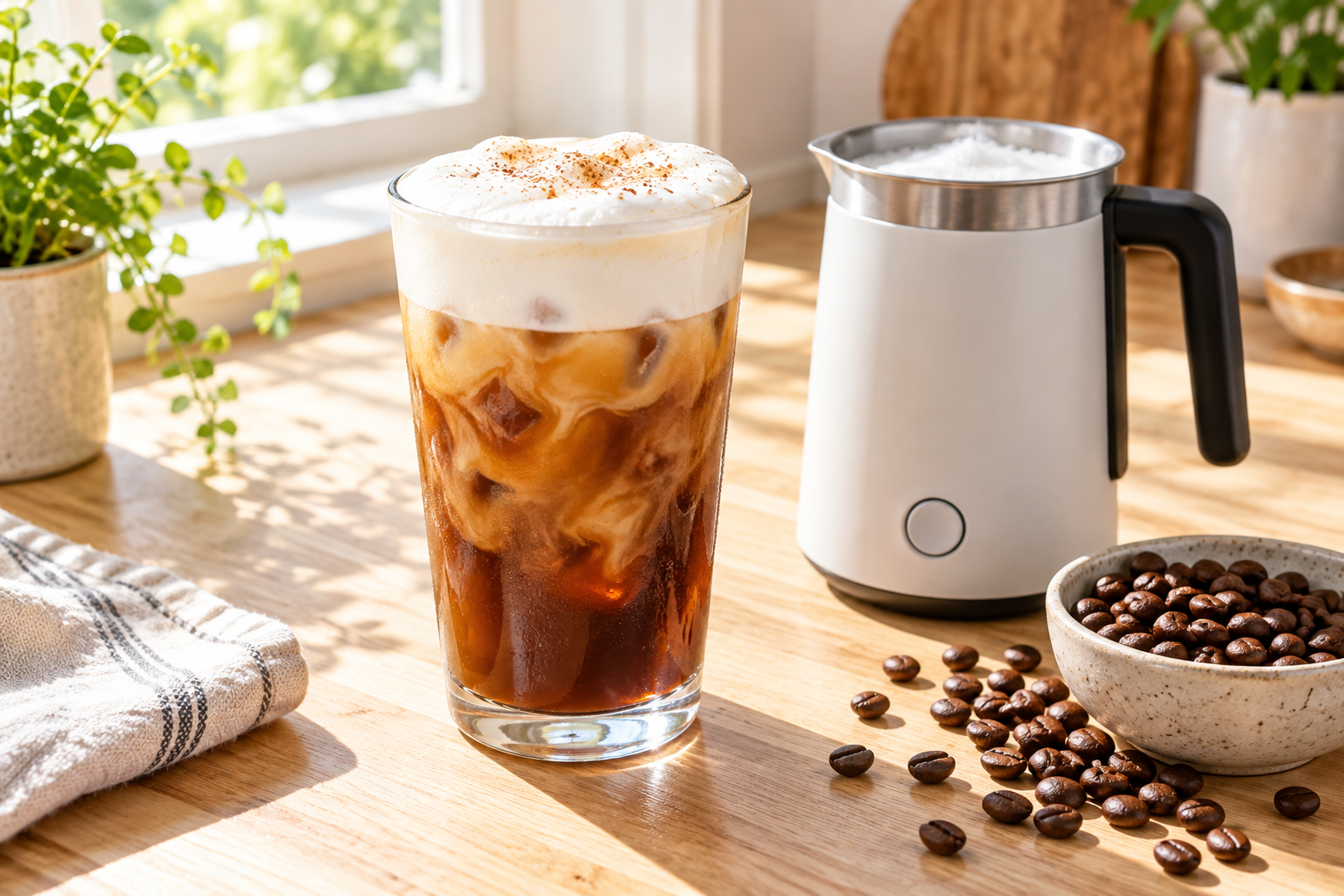
There is a moment at every good coffee counter that iced latte fans know well: the first sip through a thick, cloud-like layer of cold foam, cold milk and espresso underneath, and none of it watered down by melting ice. It looks fancy. It costs extra at most coffee shops. And it is one of the easiest coffee upgrades to make at home.
The tricky part is not the technique. It is picking a frother that can actually do cold foam well, because plenty of machines that promise foam are built entirely around hot drinks. Hot foam on a cold drink is a short-lived party trick: warm foam sits on cold milk like a lonely cloud, then collapses into the drink within a couple of minutes and leaves a strange temperature line halfway down the glass. Cold foam is meant to rest on top of an iced latte or cold brew and slowly melt into it as you drink, which is the entire appeal.
What cold foam actually is
Cold foam is simply milk that has been aerated without heat. When you whip air into cold milk, the proteins and a small amount of fat form tiny bubbles that hold their shape. Less fat actually helps here, which surprises people. Skim milk foams up thick and stiff because there is less fat weighing the bubbles down, while whole milk gives you a silkier, heavier foam that blends into the drink faster. Neither is wrong. Want the foam to sit on top for the whole drink? Go leaner. Prefer it to melt in slowly? Go whole.
A note for oat milk drinkers: standard oat drinks often foam thin and go flat quickly. Barista-blend versions are formulated to handle aeration and hold up far better. That single grocery-aisle swap changes the result more than most gadget upgrades do.
Before the shopping talk, one clarification: a jug frother and a handheld whisk wand are different tools pretending to share a name. A wand works fine for quick hot foam, but cold foam is where jug machines pull ahead, because they control the timing, keep the milk chilled while it aerates, and hold a much bigger batch.
The features worth paying attention to
So what separates a frother that makes good cold foam from one that makes sad, dissolving bubbles? A short list of details does most of the work, and only one of them is about raw power.
- A real cold mode. Some frothers only heat and whip. You need an explicit cold foam mode that aerates without warming the milk.
- Capacity around 10 ounces. Enough for one generous iced latte or two modest ones in a single batch, so you are not running the machine three times before guests get served.
- A nonstick or ceramic interior. Milk film is stubborn, and a smooth lining means a quick rinse instead of a scrubbing session after every drink.
- Auto shut-off. The machine should stop on its own when the cycle ends, because forgotten frothing milk is how kitchens get weird smells.
- Quiet operation. If the machine wakes the whole house at 6 a.m., you will quietly stop using it.
That first bullet matters more than anything else on the box. Heating is easy; every frother on the shelf can warm milk. Controlled cold aeration is the feature that separates an iced-coffee machine from a cappuccino machine that occasionally tolerates cold drinks.
Frothers worth comparing
The Melt N Sip Cart lineup has a few jug frothers that handle cold foam properly, and they suit slightly different kitchens. Here is how they line up for iced coffee season.
The 4-in-1 frother and steamer with the ceramic lining is the one that fits most iced coffee routines best. It does thick warm foam, light warm foam, cold foam, and plain warm milk in a 10.6 ounce jug, and the ceramic interior rinses clean in seconds. One button runs the whole show, which sounds trivial until you are holding a coffee in one hand and a toddler's snack cup in the other. If you want one machine that covers winter lattes and summer cold foam without changing habits, see the 4-in-1 ceramic frother on Amazon.
The SIMPLETASTE 4-in-1 frother is the value play in the group. Same core abilities: warm dense foam, warm airy foam, cold foam, and a warming mode that pulls double duty for hot chocolate and matcha in cooler months. It is a sensible pick if you want to try the cold-foam habit before committing serious money to it. Check the SIMPLETASTE frother's price on Amazon, since that is the only place to see what it costs today.
Already living in an Instant Pot household? The Instant Pot 4-in-1 frother is an easy yes. It offers cold foam, light warm foam, dense warm foam, and milk warming in a 10 ounce jug, and it fits people who already trust the brand's kitchen gear and want matching habits on the counter. For cold brew fans, this is the one its description calls out directly for iced coffees and cold brews. See the Instant Pot frother on Amazon.
The Nespresso Aeroccino 3 is the compact option for espresso-adjacent setups. It makes hot milk foam, hot milk, or cold froth with one button, and its trick is that press duration chooses the mode: a short press for hot, a two-second hold for cold froth. It is the smallest footprint of the group and a good fit if your kitchen real estate is precious or you already own a Nespresso machine and want the matching look. See the Aeroccino 3 on Amazon.
Who should skip the jug frother
Not every kitchen needs one, and pretending otherwise would be dishonest.
If you drink exactly one cappuccino a week and own an espresso machine with a steam wand, the wand already does the job for hot drinks. It never makes cold foam, though, so if iced drinks are your summer ritual, the gap is real. A steam wand also wants a purge-and-wipe routine after every single use, which is a fair trade only if you are already standing at the machine.
If your iced coffee habit runs a couple of times a week and the budget is tight, a handheld whisk wand costs very little and makes decent cold foam in a pinch. You lose batch size and consistency, the foam fades faster, and the arm gets bored. As a stepping stone it is fine. As the forever tool, it falls short.
If you have a tiny kitchenette with one outlet and zero counter space, storage weight matters more than features. That is a case for the smallest machine you can find that still has a cold mode, or for letting the coffee shop keep this particular luxury.
Getting the foam right on the first try
Getting the foam right is mostly about a few habits, not effort. Start with milk straight from the fridge, since warm milk foams poorly for cold foam and temperature is the whole point. Fill to the cold-mode line instead of eyeballing it: an overfilled jug makes weak, shallow foam because the whisk cannot pull air properly. Skim milk gives maximum lift, whole milk a creamy melt-in finish, and barista oat covers the plant-based crowd.
Serve it immediately, too. Cold foam is at its best in the first several minutes and gradually settles while the drink waits. To get the layered cafe look, pour the espresso or cold brew slowly over the back of a spoon so it floats on top of the foam. If you would rather have the classic top cap, just spoon the foam over the coffee instead.
Do not chase cafe-perfect foam on day one. Even a slightly loose cold foam turns an ordinary iced coffee into something that feels deliberate, and the machine does the actual whisking for you anyway.
Cold foam beyond the iced latte
Once the machine is on the counter, cold foam stops being a one-trick ingredient. Cold brew is the classic, but it is also good on iced matcha, where the milk layer makes the drink look almost architectural, and on chai for something close to the coffee shop order at a fraction of the cost per cup.
Flavor works too: a drop of vanilla extract, a pinch of cinnamon, or a spoon of caramel sauce whisked in with the milk gives you flavored foam in the same two-minute cycle. Keep additions light, because heavy syrups weigh the foam down.
Hosting is where the batch habit pays off: two frothing cycles produce enough foam for several iced coffees, and guests who watch the milk turn into a two-layer drink tend to act like you performed actual magic.
Care and cleanup in about a minute
Cold foam is the least messy thing a frother ever does: no scalded milk baked onto the walls, no burnt residue. Rinse the jug soon after use, wipe the whisk with a sponge, and the smooth linings on the machines above turn this into a thirty-second job. Let the jug air dry with the lid off so it does not pick up that faint fridge smell nobody asked for.
Deeper cleans are occasional: a drop of dish soap in warm water, a short whisk cycle, then a rinse. That keeps milk film from building up where the whisk meets the base. Skip the steel wool, since scratches on a ceramic lining give future milk somewhere to stick.
What to confirm on the retailer page before buying
Frother listings change over time, so before ordering, check the current price, capacity, voltage, and warranty on the live Amazon page for whichever model you pick. Availability moves around, bundles come and go, and coupons occasionally appear in the listing. Recent buyer reviews about the cold foam mode are worth a glance too, since that is the feature this whole guide rests on.
Once the frother arrives, run one cycle of plain cold water through it. It rinses manufacturing dust and gives you a risk-free practice round before the first real latte attempt.
A quick recap for the decision
For most readers building an iced coffee habit this season, the 4-in-1 frother with the ceramic lining and a dedicated cold mode is the strongest all-rounder. The SIMPLETASTE is the sensible budget entry, the Instant Pot version suits brand-loyal kitchens, and the Aeroccino 3 wins on size for espresso households. The real question is which routine you are buying for, and how many cold brews a week your future self is planning.