Milk Frothers
Cold Foam for Iced Lattes: Why Warm Milk Sinks and How to Fix It
That warm layer in the middle of your iced latte is a temperature problem, not a bad-morning problem. Cold foam, the right milk, and the build order fix it in two minutes.

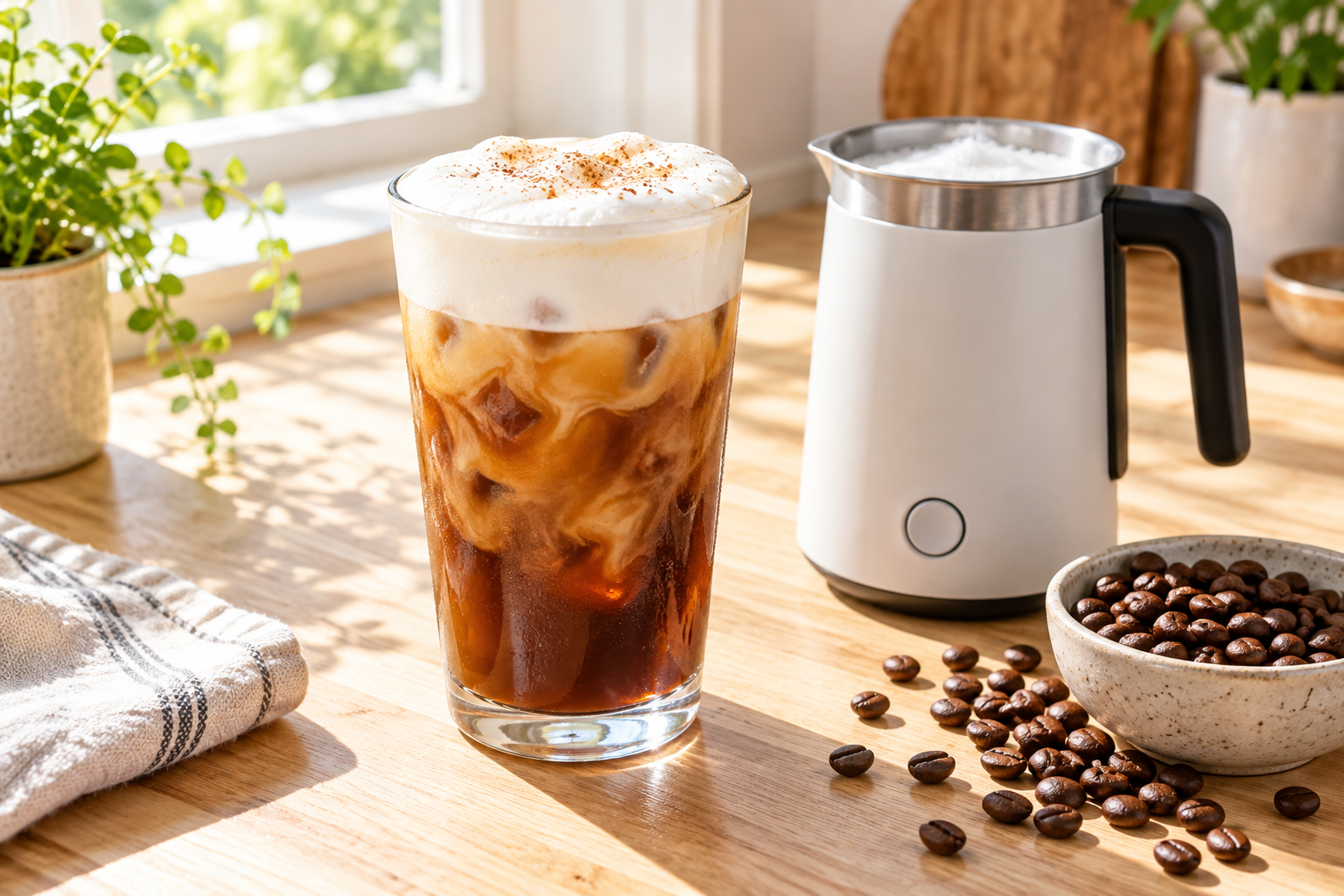
You've built the iced latte exactly the way the shop does it. Espresso, ice, a proper crown of milk on top. Then you take the first sip and something has already gone wrong: there's a warm layer hiding in the middle, and the foam you worked for is drifting down the glass like a slow avalanche. Watch a glass like this through the side and you can usually see the fault line where the warm milk is sliding under the cold stuff.
The problem almost always comes down to one thing: the milk you frothed was steamed, not chilled. The fix is to treat iced milk drinks as their own category of drink with their own rules. The technique is simple enough that once you see it, you can't unsee it, and the right small frother makes the whole thing a two-minute job.
The quick test: hold your finished glass up to the light. If the top layer stays put and you can see a clean line between the foam and the drink, the foam is doing its job. If you see warm milk streaking through the middle before you've taken a sip, the milk was too hot when it went in.
Why warm milk sinks
Warm liquid is lighter than cold liquid, which sounds like it should help. But in a glass of iced espresso, that buoyancy works against you. A pocket of warm milk rides up, meets the cold layer, cools in the middle of the glass, gets heavier, and drops. That's the warm band you taste in the first two sips. Cold foam is different. It's aerated while cold, so the bubbles are small, dense, and stable in a cold environment. Nothing inside the glass is fighting the temperature, so the foam just sits there, which is exactly what you want from foam in an iced drink.
That's why cafes that do cold foam right never steal milk from their hot steamer. They keep a separate small pitcher or frother dedicated to cold drinks. The equipment is cheap. The discipline is what makes the drink hold together.
The milk you use matters more than you'd expect
Cold foam is about structure, and structure comes from fat and protein working together. Whole milk is the easiest to work with: enough fat for body, enough protein for bubbles, and it behaves predictably when chilled. It makes the dense, slightly sweet foam that most iced lattes are built on.
2% works fine too. You get a little less body and a foam that thins out a bit faster. If you're serving a whole batch of guests rather than one cup at a time, that faster thinning is worth knowing about, because the last cup in the pitcher is what you'll actually drink. Nonfat milk froths tall and bright, but the foam is delicate and can collapse on contact with a cold glass. Oat milk makes a good, mildly sweet foam with a creamy texture that many people prefer in iced drinks. Almond milk is the tricky one: low protein means the foam breaks easily, so if it's your go-to, work faster and serve sooner.
Whatever milk you pick, chill it first. Straight-from-the-fridge beats room-temperature every time, because you want the foam to form cold, not to cool down after the fact.
Build it in the right order
The assembly order is where most home versions fall apart. Fill the glass with ice first, then pour the cold milk to about two inches from the top. Pull your shot of espresso into a small cup or directly over the ice, and let it pour through. The espresso lands on top of the milk and forms its own layer. Now comes the part that sells the drink: spoon the cold foam gently over the top, starting in the center and working outward, or pour it from a height of about six inches so it settles in a soft crown. If you pour the foam into an empty glass and add everything else after, the foam gets pushed around, diluted with espresso, and you end up with flat gray sludge instead of a cloud.
One more habit that keeps the layers honest: build the drink for one person at a time, or top up the foam last. A glass that sits for ten minutes with the foam already on will thin out while you finish making the other cups. Cold foam is not a shelf-stable decoration. It's a texture, and it has a short lifespan, which is part of the charm.
Frothers worth having for cold drinks
Most handheld frothers were designed for a few seconds of foam in a warm cup. For an iced routine, you want something that can actually froth cold, handle a bigger pitcher, and wash up without drama. Here are three picks that fit different corners of the same counter.
If your main goal is cold foam and you're fine doing it in small batches, the KIDISLE 5-in-1 frother and steamer on Amazon is the one to start with. It's rated for both hot and cold foam, the head detaches so the cup is easy to rinse, and it's dishwasher safe, which matters a lot on a daily iced latte routine. The detachable head is the underrated feature: no more fishing a fork into a wet head to knock the foam off.
If your counter already has a warm-drink habit and you want one machine that covers both sides, the Nostalgia retro frother and hot chocolate maker on Amazon is the do-both option. It's a 32 oz unit that froths, steams, and dispenses, so you can run a hot cappuccino in the morning and an iced flat white in the afternoon without clearing the counter. The retro styling also means it's less embarrassing to leave out, which is its own small win in a kitchen where you actually use the stuff you own.
And if your iced habit is a season rather than a year-round thing, the Hotel Chocolat Velvetiser on Amazon is the one that keeps the other side of your menu serious. When the weather turns and your iced glass gets put away, that machine turns cold mornings into a proper hot chocolate ritual, so the counter stays busy instead of going to waste in the off season.
Check each live Amazon page for current price and stock before ordering, and confirm the specs match your routine, because listings change faster than any article can keep up with. If your counter has room for one of these and your iced drinks are a real habit, it's the cheapest upgrade between a sad warm-middle latte and one that holds its shape till the last sip.
When the foam won't cooperate
If your cold foam collapses the moment it touches the glass, the glass is probably too cold. A frozen-hard glass chills the outside of the foam faster than it can set, so it slumps. Let the glass sit out for a minute, or swirl a little of the cold milk around the sides before you top it. If the foam comes out thin and watery, you're using a low-protein milk and you're asking it to do a job it's built for slowly. Switch to whole or 2% for a day and see if the structure comes back before you blame the tool. And if your foam is fine but the drink still tastes warm in the middle, that's the old warm-milk problem all over again, which means the foam went in warm. Chill the milk and rebuild.
Who should skip cold foam
If you like your iced coffee as one clean, even layer, cold foam is extra. You're not doing anything wrong by shaking a tumbler till it's uniform. Cold foam is for people who want a textural contrast, a little ritual, and a drink that looks the way it should for a photo. If your idea of a good iced drink is fast and mixed and you're heading out the door, keep the milk in the fridge and skip the foam entirely. It's a tool for a specific craving, not a requirement. Get the milk choice and the assembly order right, and the foam takes care of itself.
No frother? Make it the old way
Cold foam predates every gadget on your counter. Pour cold milk into a tall jar with a lid, fill it about a third full, and shake hard for thirty seconds. You'll get a thin, frothy top layer that's good enough for a quick iced coffee, and the whole method takes less time than finding the lid. The limit is structure: shaken foam has bigger, less stable bubbles than a frother makes, so it thins out within a few minutes. It's a great backup and a genuinely fine way to make your own drink, just not the crown you want on a glass you're going to sit and enjoy slowly.
A small whisk works too, and it's the better no-machine option. Whisk the milk cold for about a minute and the bubbles come out smaller and denser than shaking produces, so the foam holds noticeably longer. If you only make iced drinks on the weekend, a whisk and a pitcher might be the whole upgrade you need. The machines in this guide are for people who make this drink on weekdays and are tired of washing a whisk.
Serving a group without a meltdown
Once you're making cold foam for more than yourself, two rules change the outcome. First, build the foam in the same batch size you'll serve. A pitcher of cold foam left on the counter for an hour is a pitcher of warm, deflated milk, so make a small batch, serve it, make the next one. Second, decide the milk before the guests arrive and chill it the night before. The last thing you want on a hosting night is a warm-milk experiment in the middle of a conversation. A batch workflow is: ice in the glasses, cold milk in the glasses, espresso shots pulled and set on the counter, and a fresh small batch of cold foam made right before serving. It sounds like a lot, but each step is under a minute, and the whole thing comes together in a rhythm once you've done it twice.
For a bigger gathering, lean on the machines that can hold the workload. The 32 oz Nostalgia unit makes sense when four or five people want a drink in a short window, because you can cycle drinks through it while keeping the counter clear. The Velvetiser keeps the hot side of the menu ready for the guests who never leave the cocoa. Pick the setup that matches your actual headcount, not the one that looks best in a kitchen photo.