Tea And Kettles
Should Tea Steep in the Kettle? A Built-In Infuser Buying Guide
Loose leaves in the kettle can save a pot and strainer, but they also change how you pour, serve, and clean up. Compare a built-in infuser with a separate basket before choosing the setup that suits your tea routine.
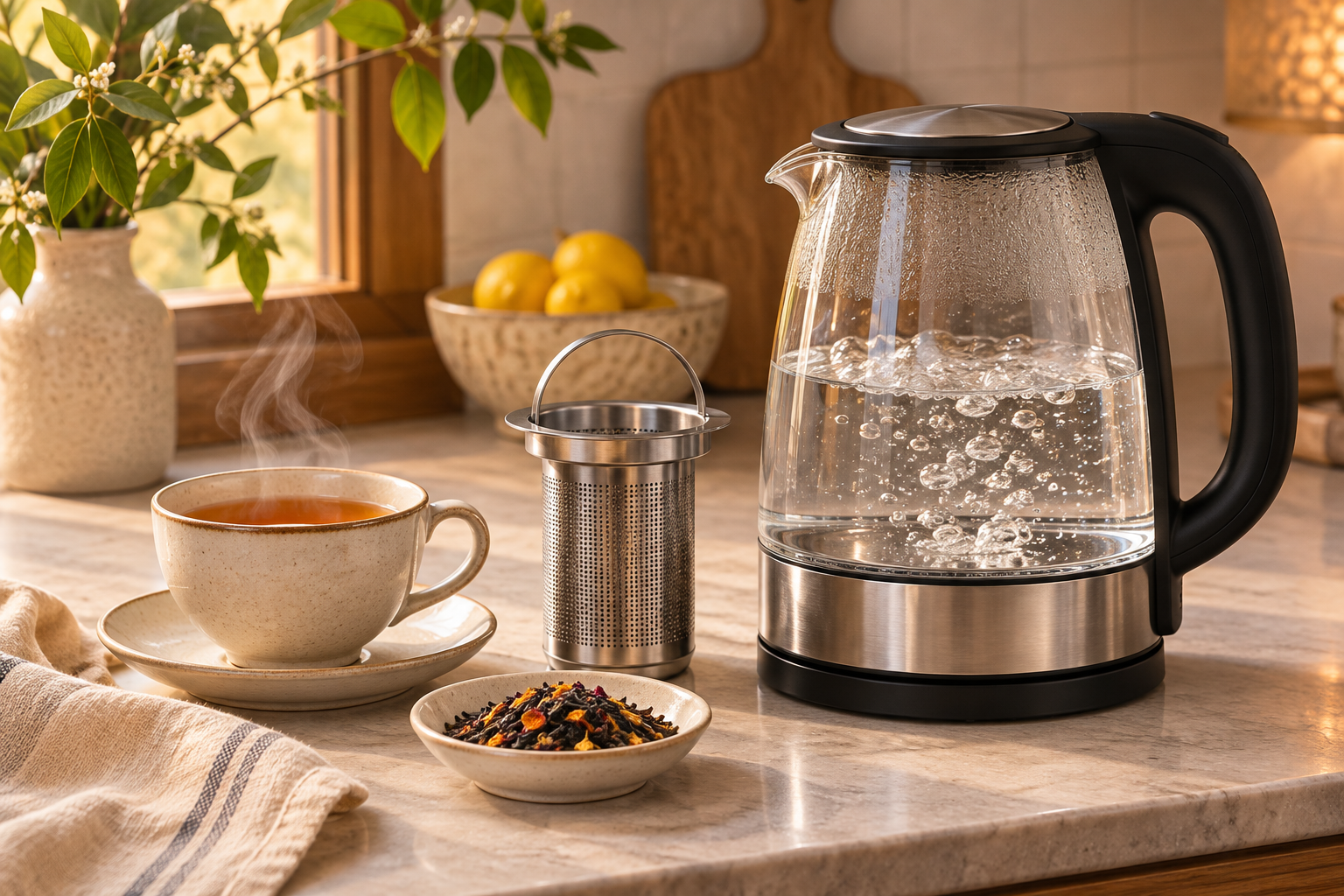
The kettle clicks off, the tea smells ready, and then you realize the leaves are still swimming in the water. If you brew loose-leaf tea often, a kettle with a removable infuser can make that moment easier. It can also turn the kettle into a serving pot, which is handy for some households and awkward for others.
The choice is less about a clever extra and more about how you make and serve tea. A built-in basket combines heating and steeping in one vessel. A separate infuser, teapot, or mug basket gives you more control over where the leaves go. Either arrangement can make a good cup. The better one is the arrangement you will actually use and clean.
What a built-in infuser changes
An infuser kettle has a removable basket that sits inside the kettle. Heat the water, add tea to the basket, let it steep, then lift the basket out before pouring. The steps are simple, and there is one less pot to wash. Some kettles also offer temperature settings, which can be useful if you drink several kinds of tea and prefer not to start every brew with fully boiling water.
For example, the Chefman kettle with a removable tea infuser in the Melt N Sip Cart range combines a 1.8-liter kettle, an infuser, and temperature controls. Those are features to compare, not a promise that one kettle fits every tea habit. Check the current product page for its exact settings, dimensions, instructions, and care details before buying.
The routine is straightforward: use fresh water, follow the tea package for temperature and steeping time, then remove the basket when the tea is ready. The UK Tea & Infusions Association's brewing guide also recommends storing tea in a cool, dry place away from strongly flavored or perfumed foods. A good infuser cannot rescue tea that has been living beside an open spice jar.
When one vessel makes sense
A built-in basket is a natural fit if you usually brew enough tea for more than one mug, then pour it soon after steeping. It keeps the brewing steps together and avoids moving hot water between a kettle and a teapot. If you like to watch tea color develop, a glass kettle can make that part visible too, depending on the model.
It is also useful when counter space is tight or when you want fewer loose accessories. A basket that lifts out can be easier to keep track of than a small strainer that migrates to the back of a drawer. If your daily tea is loose leaf, that convenience may earn its space.
There is a small hosting advantage as well. You can heat water and brew a shared pot in the same vessel, then carry the kettle to the table. But think through the serving pace first. If people pour at different times, the tea remains in one pot, and the basket has to come out at the right point. Nobody wants to play tea referee while everyone asks whether it is ready.
When a separate basket is easier
A separate infuser gives you more flexibility if you mostly make one mug at a time. Heat water in any kettle, add it to a mug or teapot, and steep the leaves there. You can leave the main kettle free for someone else, or make a second cup with a different tea without emptying and rinsing the whole kettle.
This setup can work better for households with different routines. One person may want a strong black tea while another wants a short green tea steep. Separate mugs let each person control the strength and remove their leaves independently. A shared infuser kettle asks everyone to agree on one brew, or to make batches one after another.
Separate brewing also helps if you want to serve tea from a dedicated pot. The kettle remains a water heater, while the teapot does the pouring. That division can feel calmer at a crowded table, especially when guests are choosing between tea bags, loose leaf, and herbal infusions. The tradeoff is another item to wash and store.
Capacity is not the same as a comfortable batch
A kettle's stated capacity tells you how much water it can hold, not how much tea you will want to brew at once. Start with your ordinary mug size and the number of people who usually drink together. If most brews are solo, a large vessel may mean extra water to heat and a larger basket to clean. If you regularly pour for a group, a very small basket or kettle may force repeated rounds.
Look at the infuser itself, not only the kettle listing. Is it removable without awkward handling? Does the basket have enough room for the amount of loose tea you use? Can you see how to lift it out safely when the water is hot? These are practical questions to answer from the model's manual or product details. Do not assume two baskets with similar photos work the same way.
Temperature controls matter most when you will use them. If your favorite tea package calls for a temperature below a full boil, controls can reduce the waiting and guessing. If you make the same kind of tea every day and are content to let water cool briefly, presets may be less valuable than a simple kettle that is easy to pour and clean. Read the instructions for the tea you buy; tea types and brands can differ.
Cleanup is part of the decision
Loose leaves have a talent for escaping at the least convenient time. Check whether the infuser lifts out completely, whether the mesh looks easy to rinse, and whether the kettle opening gives you room to reach inside. A basket with many small corners may take more attention than a simple mug strainer. If the kettle is shared, ask who will rinse it after the last cup. That person should get a vote.
Follow the care instructions for the exact kettle. Some parts may be hand-wash only, and the electrical base or handle should not be treated like a drinking glass. Let hot equipment cool before cleaning, and avoid guessing about dishwasher use or cleaning products. The manufacturer's overview of tea-infuser kettles explains the general lift-out-basket workflow; use the manual for the specific model you are considering.
Tea can also leave residue or a scent behind if you switch between strongly flavored blends. If you use the kettle for plain hot water too, consider whether you want tea brewed inside it every day. A separate mug infuser keeps those jobs apart and may be easier to rinse between different drinks.
A quick way to choose
- Choose a built-in infuser if you make loose-leaf tea in shared batches, want fewer vessels, and will remove the leaves before serving.
- Choose a separate basket or teapot if you mostly brew one mug, share a kettle with people who drink different teas, or want the kettle to stay neutral for other uses.
- Before buying either setup, check the opening, basket size, temperature options, minimum fill, and cleaning directions in the current model information.
If you are undecided, notice what already annoys you. If you keep searching for a strainer or washing a separate pot, a built-in basket may solve a real nuisance. If your kettle is already shared between several drinks and people, a mug infuser may keep the routine simpler. The smartest tea accessory is often the one that does not create a new chore.
Product details and retailer terms can change. Confirm current specifications, price, availability, care directions, and return details on the retailer page before ordering.