Milk Frothers
Cold Foam for Iced Lattes: How to Keep the Milk Cold and the Foam Stable
Cold foam depends on cold milk, stable texture, and a simple cleanup path. This guide explains what to compare before adding a frother to a small iced coffee setup.
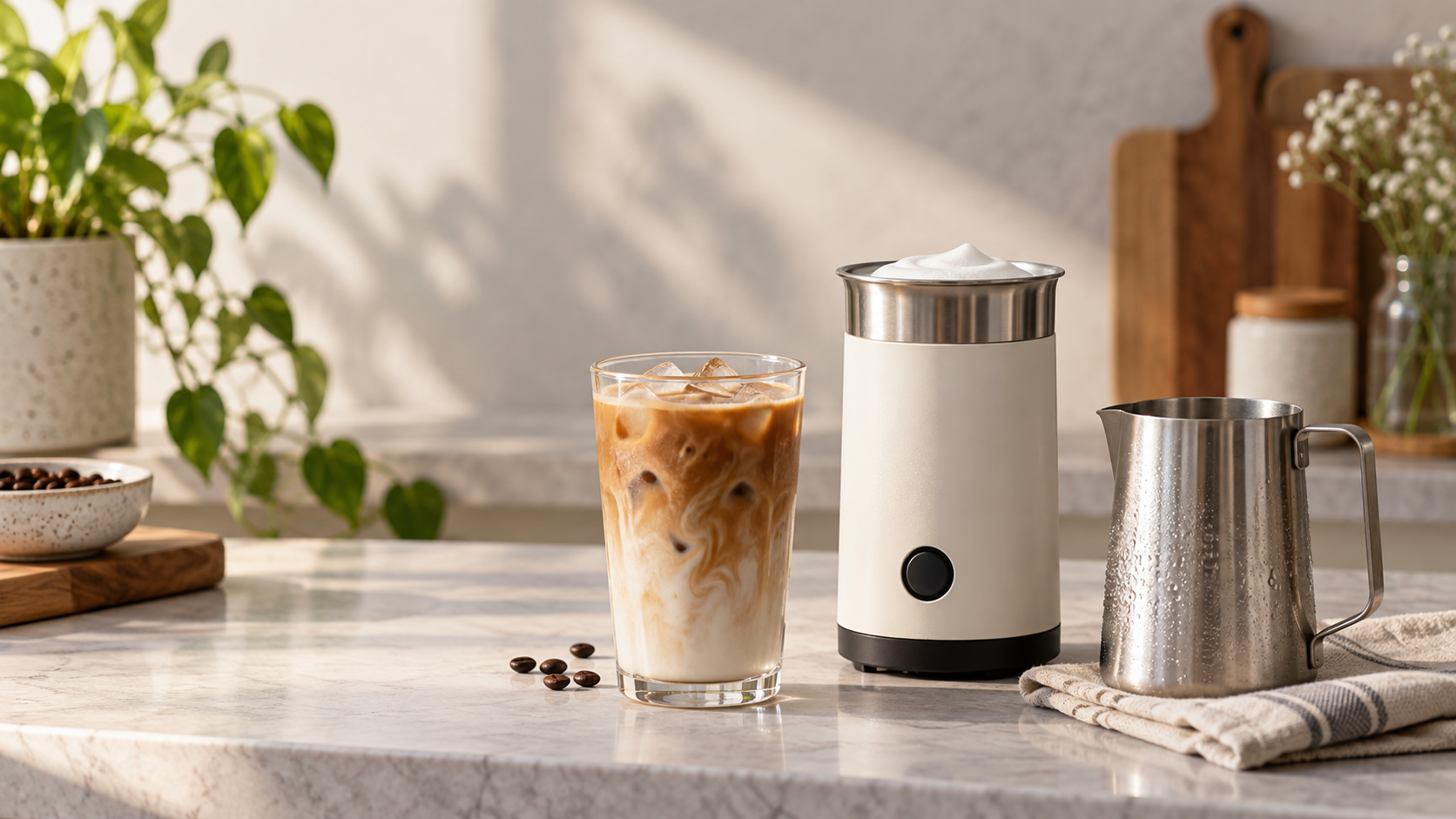
Cold foam is a common part of iced latte menus, and it is usually made from milk that has been aerated while still cold. For a home counter, the main question is not whether you can make a drink, but whether the tool can keep the milk cold enough, create a stable texture, and clean up without turning into a chore. A milk frother can be a useful addition to a small drink setup, but the right choice depends on how often you make iced coffee, how much milk you use, and how much counter space you have. If you are comparing options, start with the basics: power, capacity, cleaning, and how the device handles cold milk. The Amazon search below can help you narrow down current listings without guessing at features. Amazon search
Handheld immersion frothers are the simplest starting point because they use the milk container you already have and do not require a dedicated base. They are useful when you want to make one cup at a time and keep the setup compact. The main limit is that the user controls the speed and the time, so the result can change quickly if the milk is too warm or the pitcher is too full. Electric frothers with a built in pitcher can be more consistent because they manage the foam process in one place. They also tend to be easier to use for people who want a repeatable texture without watching the wand. The trade off is that they take more space and may need more careful cleaning if the pitcher is not removable.
Cold milk is the key to cold foam. If the milk is already warm, the frother will still make bubbles, but the texture may collapse faster and the drink may taste less clean. A chilled pitcher, a cold milk container, or a short burst of cold water can all help keep the milk from warming up too quickly. Some frothers are designed for cold milk, while others are better suited to warm milk for hot drinks. That difference matters because a tool that works well for a hot latte may not give the same result for an iced coffee. If you plan to make cold foam often, look for a device that can handle cold milk without needing a long warm up. Also check whether the pitcher is easy to fill and empty, because a small leak or a narrow opening can make the process slower than it should be.
Texture is the next thing to consider. Cold foam can range from a light, airy top to a smoother, milkier layer that blends into the coffee. The goal is usually a stable layer that does not sink into the drink too quickly. A frother that creates very large bubbles may look dramatic, but it can disappear faster and make the drink feel less balanced. A frother that creates a finer foam may be easier to pour and more useful for a layered iced latte. If you are not sure which texture you want, start with a simple test: make one cup with cold milk and watch how the foam behaves after a minute. If the foam stays on top and the drink still looks clean, the tool is likely a good fit. If the foam drops into the coffee or turns into a thin film, you may need a different setting, a different milk, or a different type of frother.
Capacity and counter space matter more than they look at first. A small frother may be enough for one cup, but it can become a bottleneck if you are serving more than one person. A larger pitcher can hold more milk, but it may need more room to sit and more time to clean. If your counter is tight, a handheld option may be easier to store because it can go into a drawer or a small bin. If you make iced coffee for guests, a built in pitcher may be more practical because it keeps the milk in one place and reduces the need to move a separate container. The best size is the one that matches your usual routine, not the largest option you can find.
Cleaning is the part that decides whether the tool stays useful. Milk leaves residue quickly, and a frother that is hard to rinse can become a small daily problem. Look for parts that are easy to take apart, a pitcher that is wide enough to reach, and a wand or base that does not trap milk in a tight corner. Some devices are easier to clean when the pitcher is removable, while others are simpler when the whole unit can be rinsed quickly. If you plan to use the frother after a busy morning, choose a design that can be cleaned in a short time. A tool that needs a long soak or a careful brush may work well, but it may also get used less often.
For most small counters, a compact handheld frother is the easiest starting point if you want to make iced coffee without adding a large appliance. It uses less space, works with a container you already have, and lets you adjust the foam to your taste. If you want a more consistent result and make iced lattes often, a built in electric frother may be worth the extra counter space. The key is to match the tool to your milk, your counter, and your cleanup routine. Cold milk, a stable texture, and a simple cleaning path are the three things that keep cold foam useful at home.