Milk Frothers
Cold Foam for Iced Lattes: What to Compare Before You Buy
A cold foam maker can make iced lattes faster, but the right choice depends on milk type, counter space, and how often you will use it.

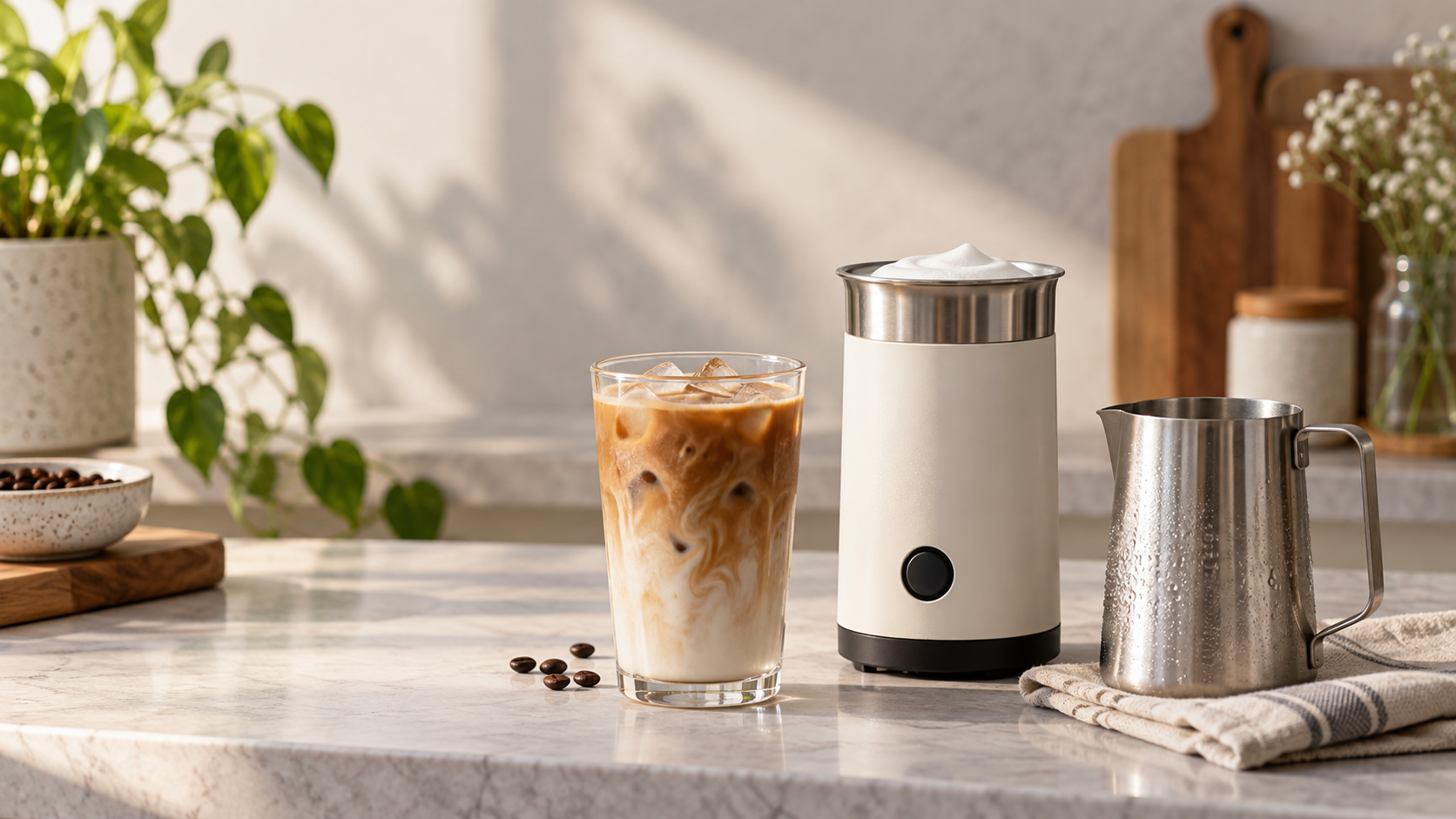
When you want iced lattes without a long wait, cold foam is the part that changes the drink. It adds a light, cold layer that sits on top of the coffee and makes the cup feel finished. A dedicated cold foam maker is built for that job, while a general milk frother may work for warm drinks and only part of the cold foam routine. The first thing to compare is how the machine handles cold milk. If it is designed for cold foam, it should take milk straight from the fridge and make a stable layer without needing a separate warming step. If it is a general frother, check whether it can froth cold milk at all and whether the result is thin, watery, or too soft for a latte.
The next detail is the milk container. A small pitcher is easier to clean, but it may only make one cup at a time. A larger pitcher can serve a family or a small gathering, but it takes more counter space and may need more time to reach a consistent texture. If you make one iced latte a day, a compact pitcher is usually the better fit. If you often make two or three cups, look for a pitcher that can hold enough milk without forcing you to refill it mid batch. Also check the lid and pour spout. A lid that seals well helps keep the foam from collapsing, and a spout that pours in a controlled line makes it easier to layer the foam over the coffee without mixing it into the cup.
Power and speed matter more than they look. A machine that froths quickly can keep up with a busy morning, but a slow model may still work if you are not in a rush. Compare the wattage, the cycle time, and the noise level. Some cold foam makers use a high speed motor that makes a strong sound, while others use a quieter motor that takes longer. If you use the machine near a kitchen window or a shared space, a quieter model may be worth the extra wait. You can also compare how the machine handles different milk types. Whole milk often makes a richer foam, but low fat milk can be lighter and may need a different setting. Plant based milk can vary by brand, so a machine with a simple setting or a clear manual is useful when you switch between options. For a quick comparison, see Amazon cold foam maker search.
Cleanup is the part that decides whether the machine stays useful. A cold foam maker is only as good as the time you spend rinsing it after each use. Look for a pitcher that can be rinsed quickly, a removable blade or frothing head, and a base that does not trap milk in a hard to reach corner. If the pitcher is dishwasher safe, that is a real benefit, but check the manual because some parts need hand washing. Also compare the size of the opening. A wide opening makes it easier to see the foam and to clean the inside, while a narrow opening may look sleek but can be slower to clean. If you make iced lattes every day, a machine that takes two minutes to clean is more likely to stay in daily use than one that needs a longer routine.
Counter space is a practical limit that many buyers underestimate. A cold foam maker is not just a pitcher. It also needs room for the base, a cord, and a place to set the lid while you pour. If your counter is already full of a kettle, coffee maker, or blender, a compact model may be the only option that fits. A larger machine can be more useful for groups, but it can also become a bottleneck if there is not enough room to move around it. Measure the area where you plan to use it, and leave a little extra space for the cord and for a cup to sit next to the machine. A machine that fits the counter well is easier to use, easier to clean, and less likely to get pushed to the back of the kitchen.
For most readers who want a simple iced latte setup, a dedicated cold foam maker is the clearest choice. It is built for cold milk, it is easier to use for one cup, and it usually gives a more consistent result than a general frother that is not designed for cold foam. If you also make hot drinks often, a general milk frother may be more flexible, but it may need more steps to make cold foam. If you want a machine that can handle a small group, look for a larger pitcher and a stable base. If you want a machine that fits a small counter, look for a compact pitcher and a simple one button control. The best fit depends on how often you make iced lattes, how much milk you need, and how much room you have on the counter.
Before you buy, compare the milk type, pitcher size, power, noise, cleanup, and counter space. A cold foam maker can make iced lattes faster and easier, but it is not a magic fix for a busy kitchen. If the machine fits your daily routine and your counter, it can become a useful part of the morning. If it is too large, too slow, or too hard to clean, it will likely sit unused after the first week. For a simple iced latte setup, choose a dedicated cold foam maker that matches your milk type and counter space.