Milk Frothers
Milk Frother for Iced Coffee: What to Compare Before You Buy
A practical comparison of the features that matter when choosing a milk frother for iced coffee, with a clear recommendation for small kitchens.

Choosing a milk frother for iced coffee is less about speed and more about control. The goal is to turn cold milk into a stable, drinkable foam without turning the drink into a thin, watery cup. A good frother should make the milk feel smooth, not just aerated, and it should work well with the kind of iced coffee you already drink. If you make a small cup at home, a compact electric frother is usually the easiest path. If you make larger batches for guests, a larger vessel or a manual option may fit better, but the basic comparison points stay the same.
The first thing to compare is the milk temperature setting. Iced coffee drinks best when the milk is cold, but the foam needs enough structure to hold. A frother with a cold milk setting or a low heat option gives you more room to adjust the result. Some models only froth at one temperature, which can make the drink too warm or too thin. If you want a consistent iced latte, look for a unit that lets you keep the milk cold while still creating a usable foam. That is the main difference between a basic frother and one that actually fits the drink.
The second thing to compare is the cup opening. A wide opening makes it easier to pour milk in and to get the foam out without losing the texture. A narrow opening can work, but it often makes the foam collapse faster because the air escapes too quickly. If you plan to use the frother for iced coffee, a wider cup is usually more practical. It also helps when you are adding the foam to a glass that already has ice and coffee. The foam should sit on top, not sink into the drink. A wide opening gives you more control over that layer, and it makes cleanup a little easier because the milk does not get trapped in a tight corner.
The third thing to compare is the cleaning method. A milk frother is only useful if you can clean it quickly. Look for a removable cup, a dishwasher safe part, or a design that rinses well. Some models have a small internal motor that is hard to reach, and that can make the cup feel less fresh after a few uses. If you want to use the frother more than once a week, choose a design that is easy to take apart. A quick rinse after each use is still important, but a simple design makes that step less annoying. The best frother for iced coffee is the one you will actually clean, not the one that looks impressive on the counter.
The fourth thing to compare is the size of the vessel. A small frother is good for one cup, but it can become limiting if you want to make a second cup or a larger glass. A larger vessel gives you more room, but it also takes up more counter space. If your kitchen is tight, a compact model is usually the better choice. If you host often, a larger vessel may be worth the extra space. The key is to match the size to the way you drink. A single cup at home does not need a large tank. A small group does not need a tiny cup. The right size is the one that fits your routine without forcing you to make extra trips to the fridge or the sink.
The fifth thing to compare is the type of foam it makes. Some frothers create a light, airy foam that is easy to pour but not very stable. Others create a denser foam that holds its shape better. For iced coffee, a denser foam is usually more useful because it stays on top of the drink longer. A light foam can look nice, but it may disappear quickly when the ice melts. If you want a drink that looks good from the first sip to the last, choose a frother that makes a stable foam. That is the main difference between a basic frother and one that actually fits the drink. A stable foam also makes the drink feel more balanced, because the milk does not just float on top and then sink into the coffee.
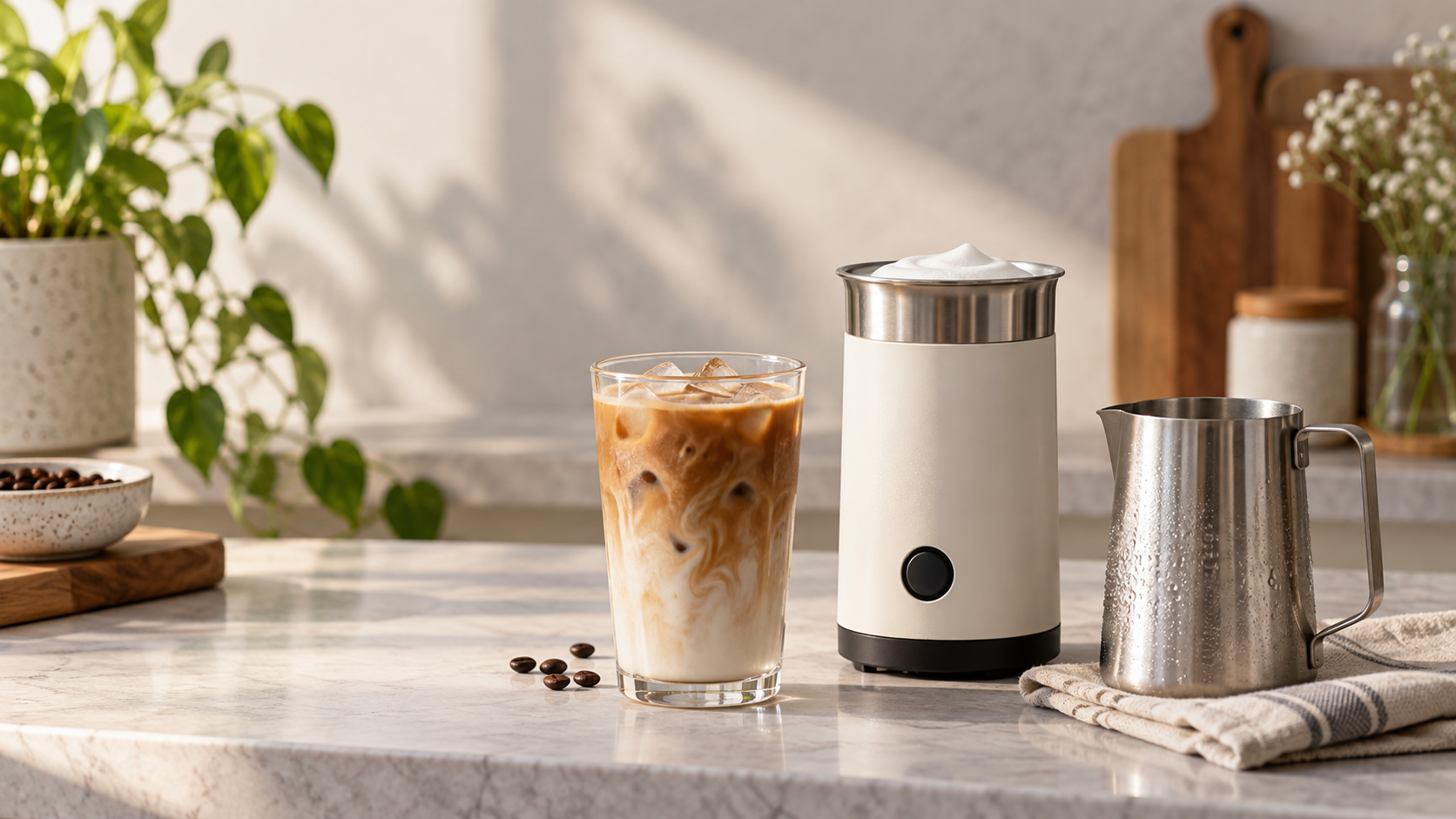
For most small kitchens, a compact electric milk frother with a cold milk setting and a wide cup opening is the practical choice. It gives you enough control to make a stable foam without taking up too much space. It is also easier to clean than a manual option, and it works well for iced coffee without needing extra tools. If you want a simple upgrade that fits the drink, choose a model that keeps the milk cold and makes a stable foam. That is the main difference between a basic frother and one that actually fits the drink. Amazon